Tuesday, December 9, 2025

Announcement of the 2025 World Youth and Junior SAMBO Championships in Indonesia


The World’s Strongest Come to Bishkek | 2025 World SAMBO Championships


[VIDEO] Highlights of the World SAMBO Cup 2023 in Kyrgyzstan


Croatian Children's SAMBO Championship Held in Sveta Nedelja


Croatian Children's SAMBO Championship Held in Sveta Nedelja

Federations
27 November 2025 FIAS
Croatian Children's SAMBO Championship Held in Sveta Nedelja

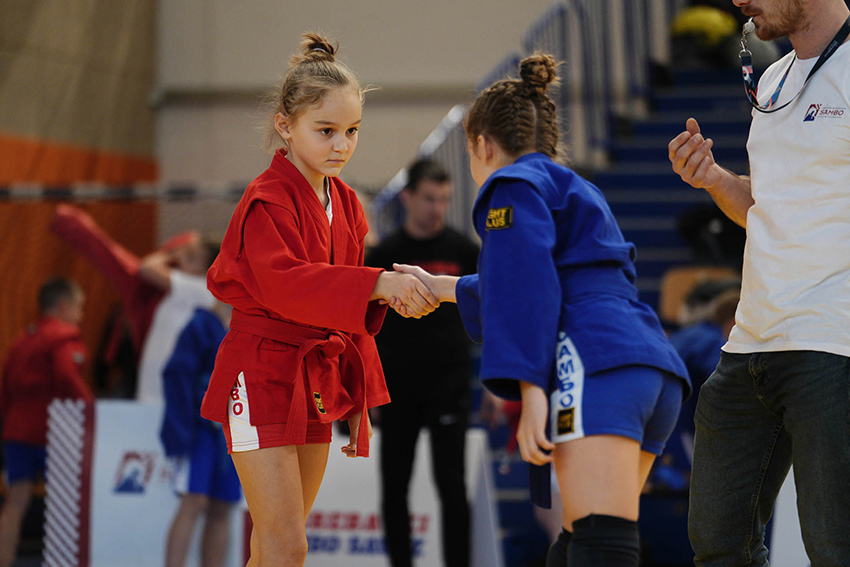
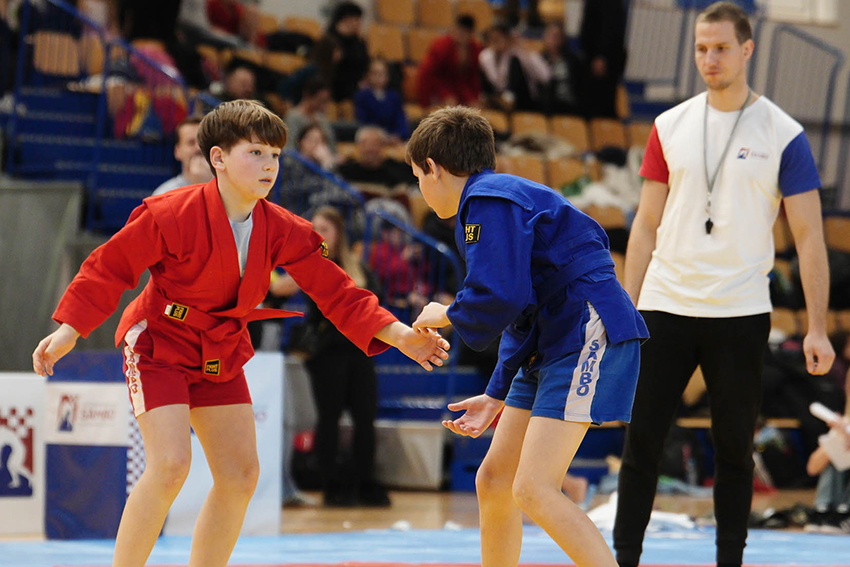
The Croatian city of Sveta Nedelja became a hub for young SAMBO athletes from across the country on November 22nd. The children's SAMBO championship brought together 176 competitors on the mats, competing in age categories under 8, 10, 12, and 14 years old.

01.jpg

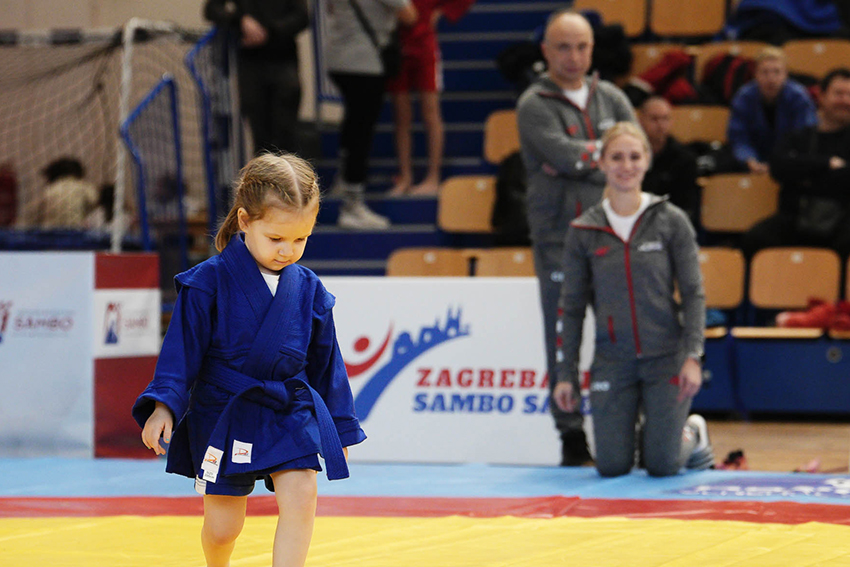
Organizing a tournament of this scale for young participants is no easy feat, but the local SAMBO club “Tigar” rose to the challenge as technical organizer and host. The city's sports hall buzzed with youthful energy, competitive spirit, and genuine emotion – from participants, coaches, and parents alike.

02.jpg

“The championship clearly demonstrated that SAMBO in Croatia isn't just surviving – it's thriving. Each year, more young athletes step onto the mat, their technical skills improve, and the infrastructure grows stronger. Nearly two hundred children and teens competed, which shows that SAMBO is resonating with the younger generation," noted the national SAMBO federation.

03.jpg

The organizers emphasized that "today's eight- and ten-year-old athletes are tomorrow's national and international champions. This means Croatian SAMBO will be able to delight its fans with new victories and achievements on the world stage in the years to come."


Dalil Skalli Re-Elected President of the Royal Moroccan Federation of SAMBO and Tai-Jitsu


Dalil Skalli Re-Elected President of the Royal Moroccan Federation of SAMBO and Tai-Jitsu

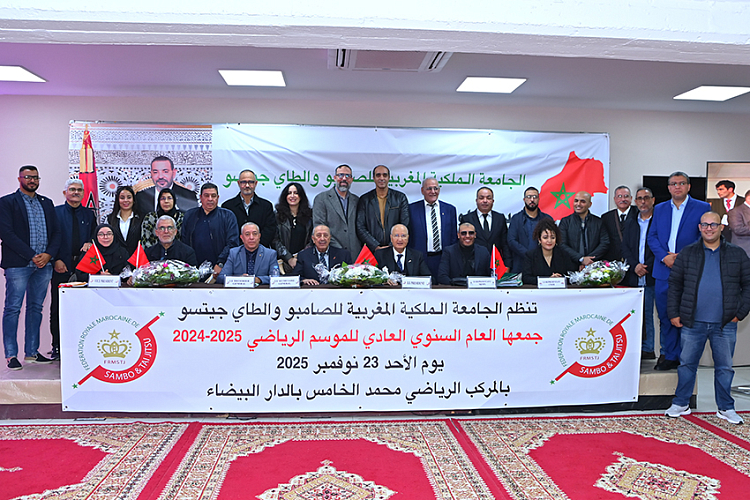
The regular elective General Assembly of the Royal Moroccan Federation of SAMBO and Tai-Jitsu took place on November 23 in Casablanca.

The event was attended by representatives of the Ministry of National Education, Preschool Education and Sports, the Moroccan National Olympic Committee, presidents of regional SAMBO leagues, affiliated associations, and members of the national press.

During the assembly, reports on the federation’s activities and its financial report were presented and unanimously approved. Dalil Skalli highlighted the achievements of Moroccan sambists on the international stage. Participants also discussed current development priorities and outlined the federation’s short-term goals.

Following the presentations, the election of the federation’s president was held. Based on the results of the vote, Dalil Skalli’s candidacy received full support from all affiliated associations.

Dalil Skalli, re-elected as President of the Royal Moroccan Federation of SAMBO and Tai-Jitsu, also serves as President of the African SAMBO Confederation and Vice-President of the International SAMBO Federation (FIAS).

Hungarian SAMBO Championship Sees Growing Youth Participation

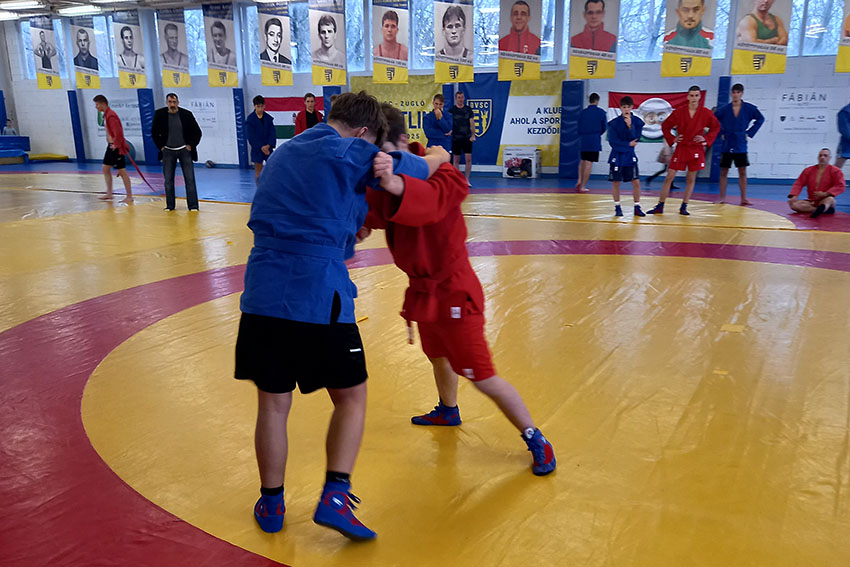
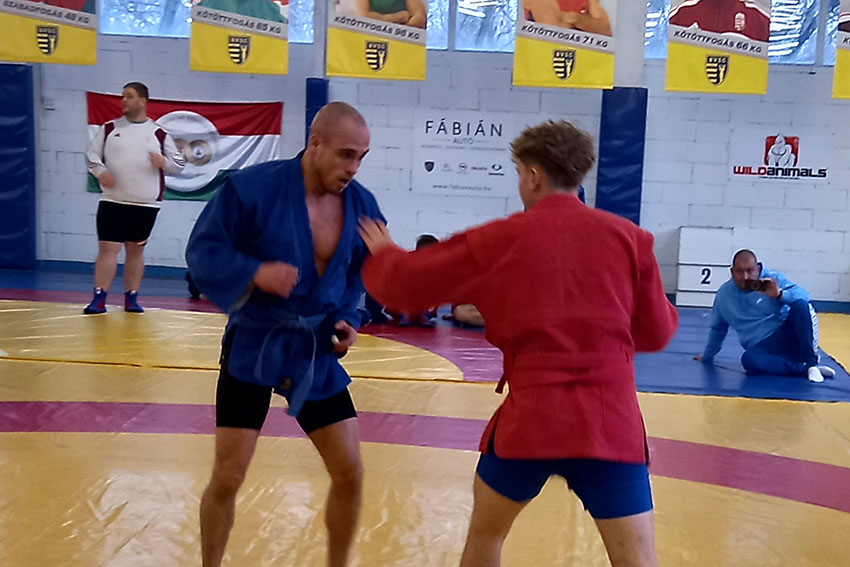
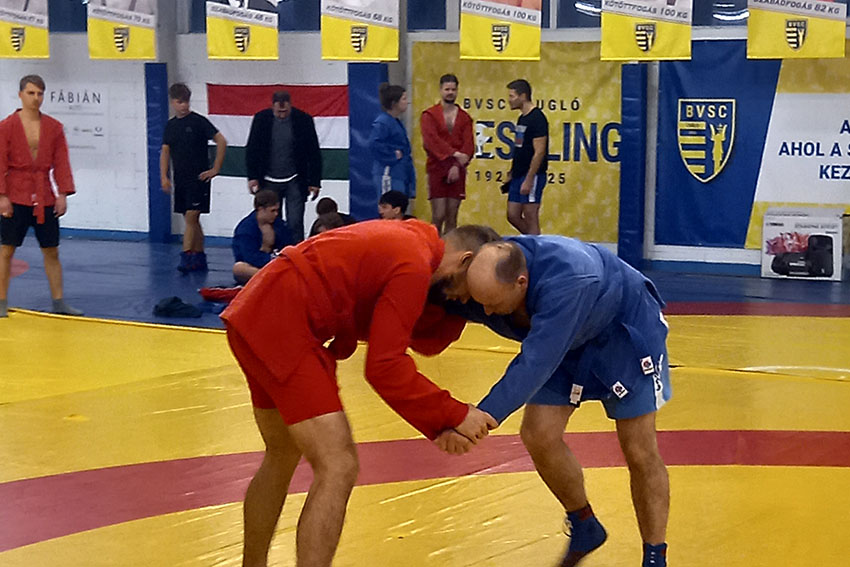
 The Hungarian SAMBO Federation held its National Championship on November 29th at the BVSC wrestling hall in Budapest, with competitions across cadet, youth, and adult age groups.

The event featured eleven weight categories, with some divisions attracting up to eight competitors. The turnout reflected a gradual increase in youth participation compared to previous years.

01.jpg

"I am happy that more young people are reaching the competitions than in recent years, I definitely evaluate this positively," said Imre Papp, President of the Hungarian SAMBO Federation.

While pleased with the current development, Papp noted there is still potential for expansion. "I hope that more clubs will participate next year," he said, indicating that broader club involvement remains a goal for the federation.

02.jpg

Looking ahead, the Hungarian SAMBO Federation is planning to host a domestic international competition in late January. The event is intended to provide local athletes with additional competitive experience.

"We will have a domestic international competition at the end of January, which can be a good experience. We have plans," Papp stated.

03.jpg

The November championship served as the main annual national event for Hungarian sambists, bringing together athletes from different age categories to compete for national titles. The federation plans to continue its work on developing the sport's presence in the country through regular competitions and outreach to new clubs.


+100 kg: Batkhuyag Outmanoeuvres to Take Gold

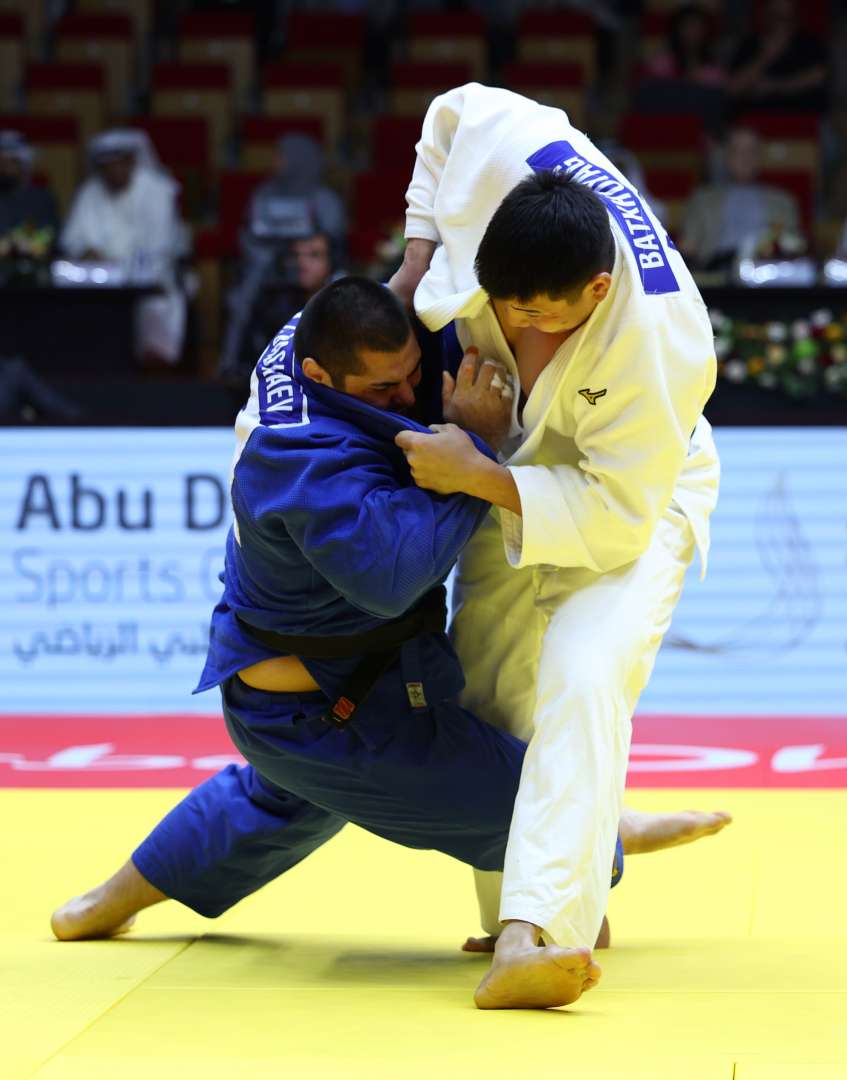
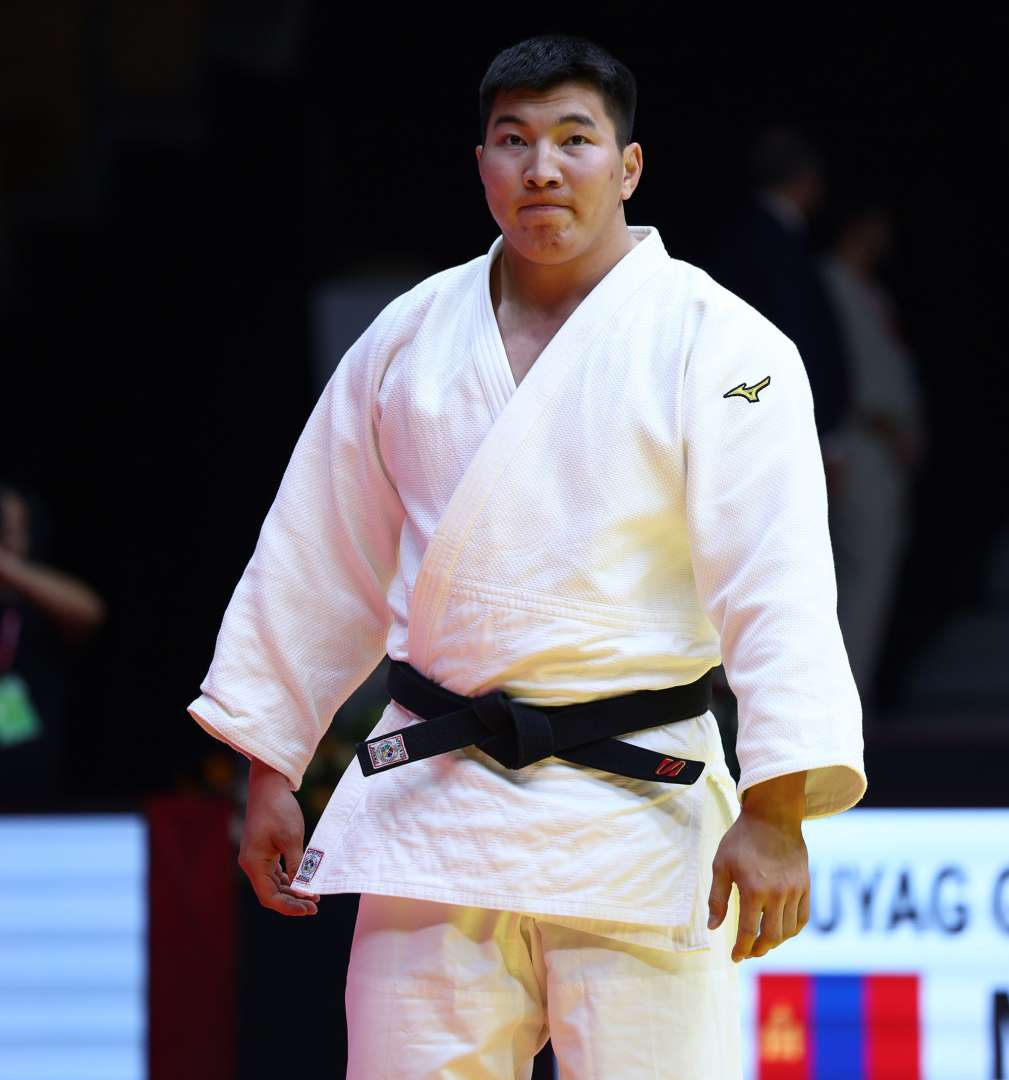
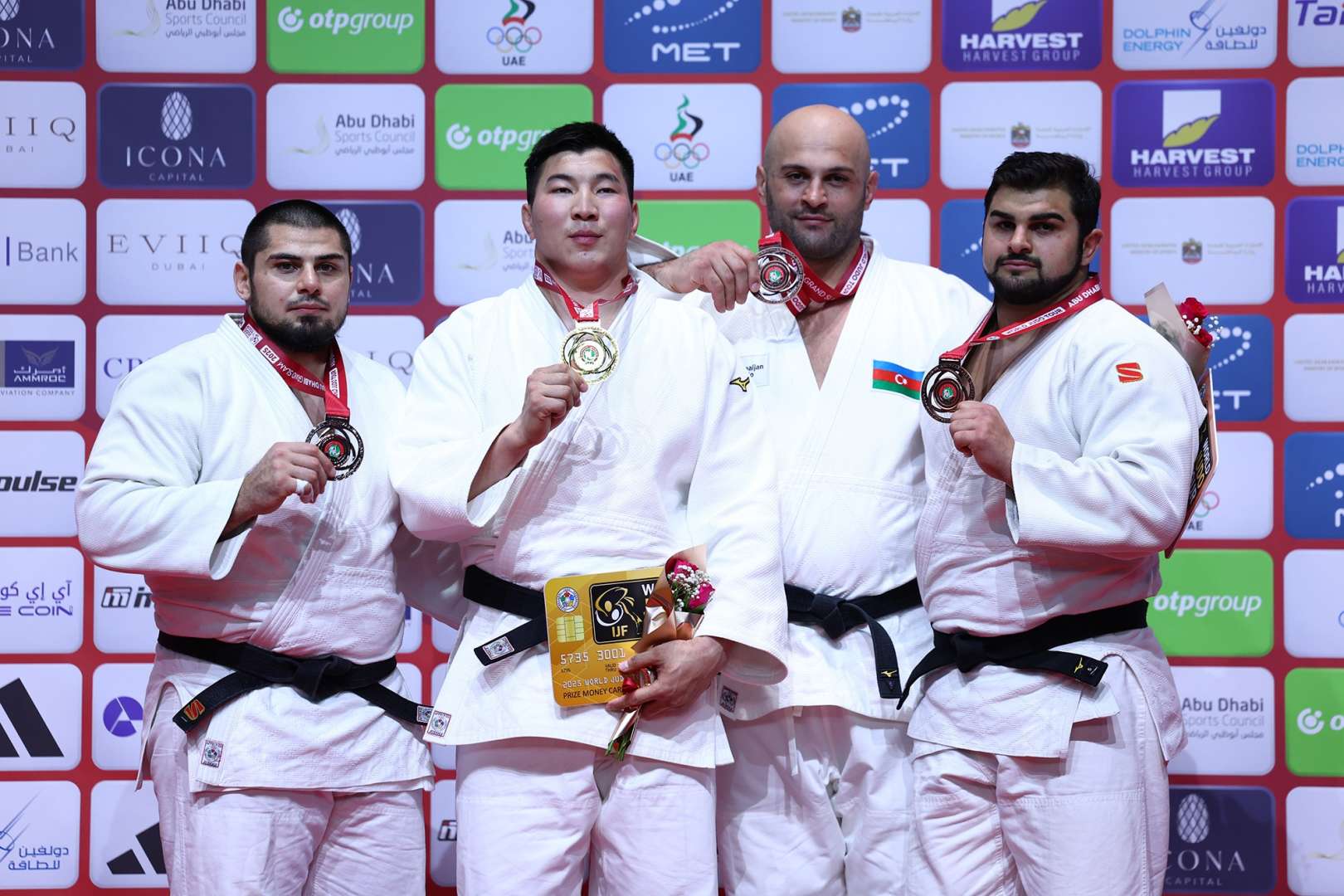
 Where many categories took time to settle, the +100 kg division wasted none, producing one of the first confirmed finals of the day. Gonchigsuren Batkhuyag (MGL) maintained strong momentum through the morning, while Olympic medallist Tamerlan Bashaev (RUS) advanced with characteristic stability, bringing them face to face for the gold medal.

Final, Gonchigsuren Batkhuyag (MGL) vs Tamerlan Bashaev (RUS)

Batkhuyag executed his game plan to perfection. Firm on his feet, patient and tactically disciplined, he waited for Bashaev’s characteristic shoulder attacks before shutting them down and countering with confidence. One such opportunity was enough; he scored a yuko, then managed the remainder of the contest with complete control until the final gong. It was gold for Gonchigsuren Batkhuyag after a superbly measured performance.

Gold medallist, Gonchigsuren Batkhuyag (MGL).

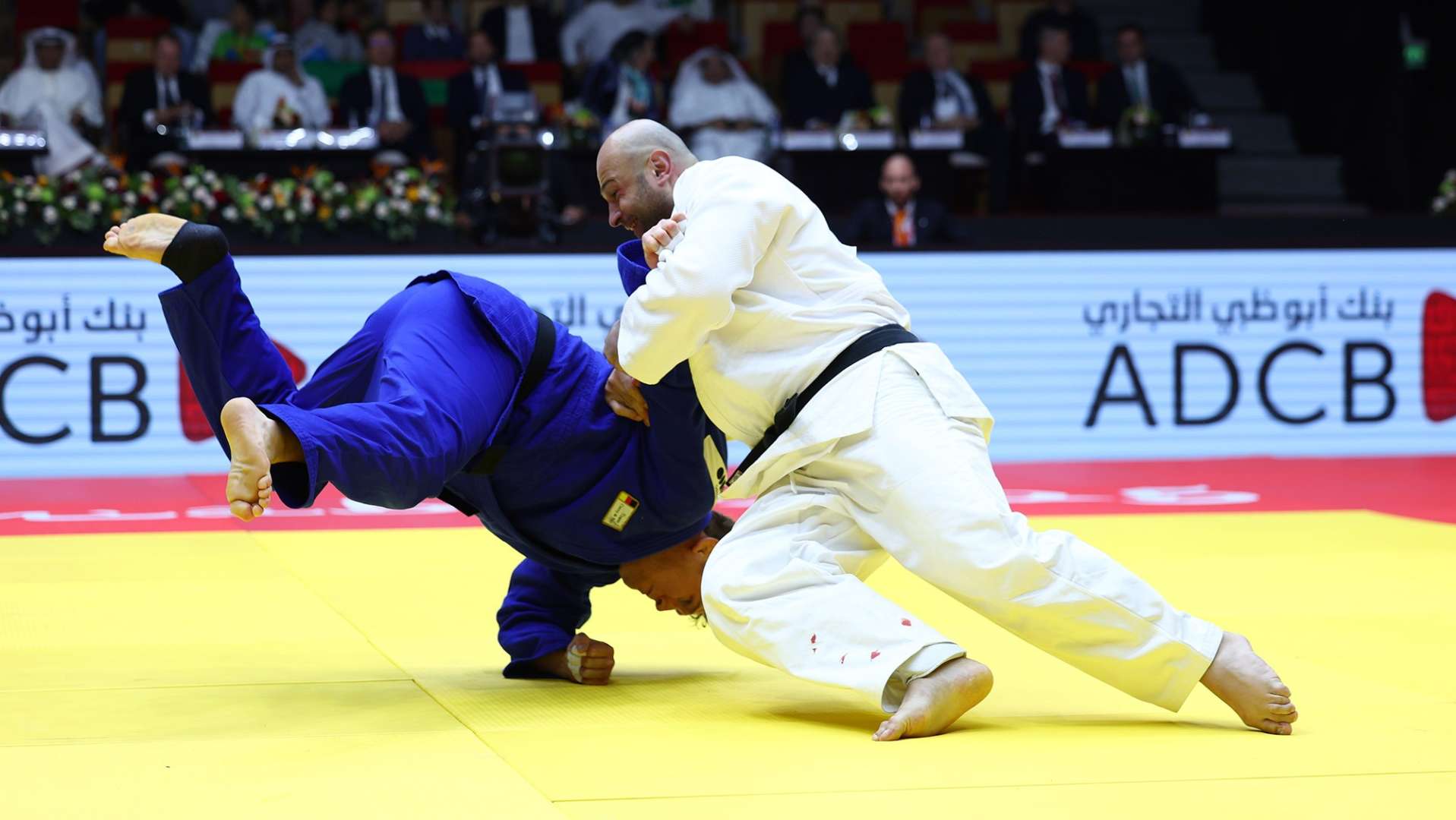
The bronze-medal match-ups saw Ushangi Kokauri (AZE) take on Jur Spijkers (NED) and Dzhamal Gamzatkhanov (AZE) meet Irakli Demetrashvili (GEO), offering two contests with very distinct profiles.

Bronze medal contest, Ushangi Korauri (AZE) vs Jur Spijkers (NED)

In the first bronze-medal bout, Kokauri got the better of Spijkers with a classic heavyweight uki-otoshi, finishing with osaekomi to secure his place on the podium.

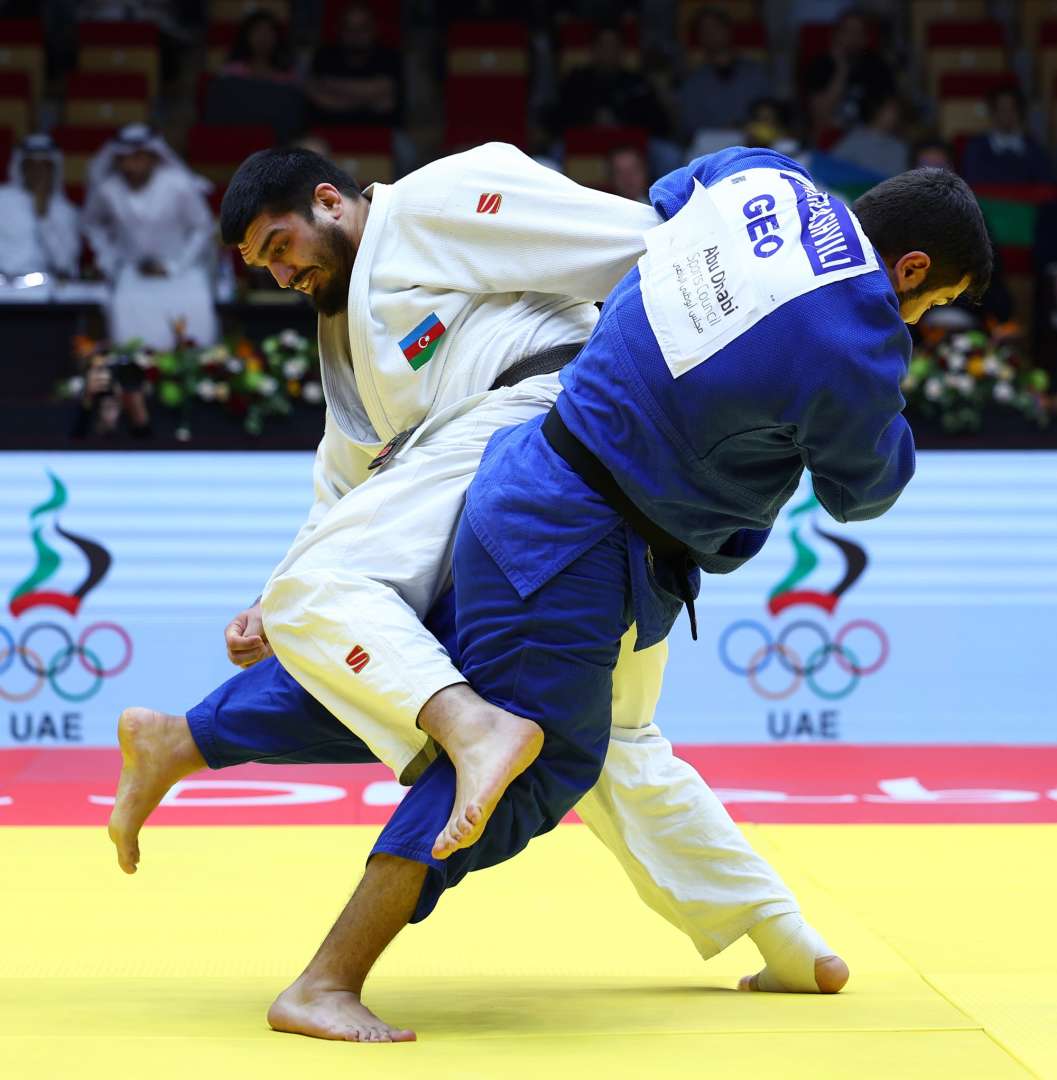
Bronze medal contest, Dzhamal Gamzatkhanov (AZE) vs Irakli Demetrashvili (GEO)

The final bronze medal contest of the weekend proved tense until the very last second, with a third shido threatening both judoka. In the end, it was a yuko scored roughly one minute before the end of normal time that made the difference, allowing Demetrashvili to prevail and join the day’s medallists.

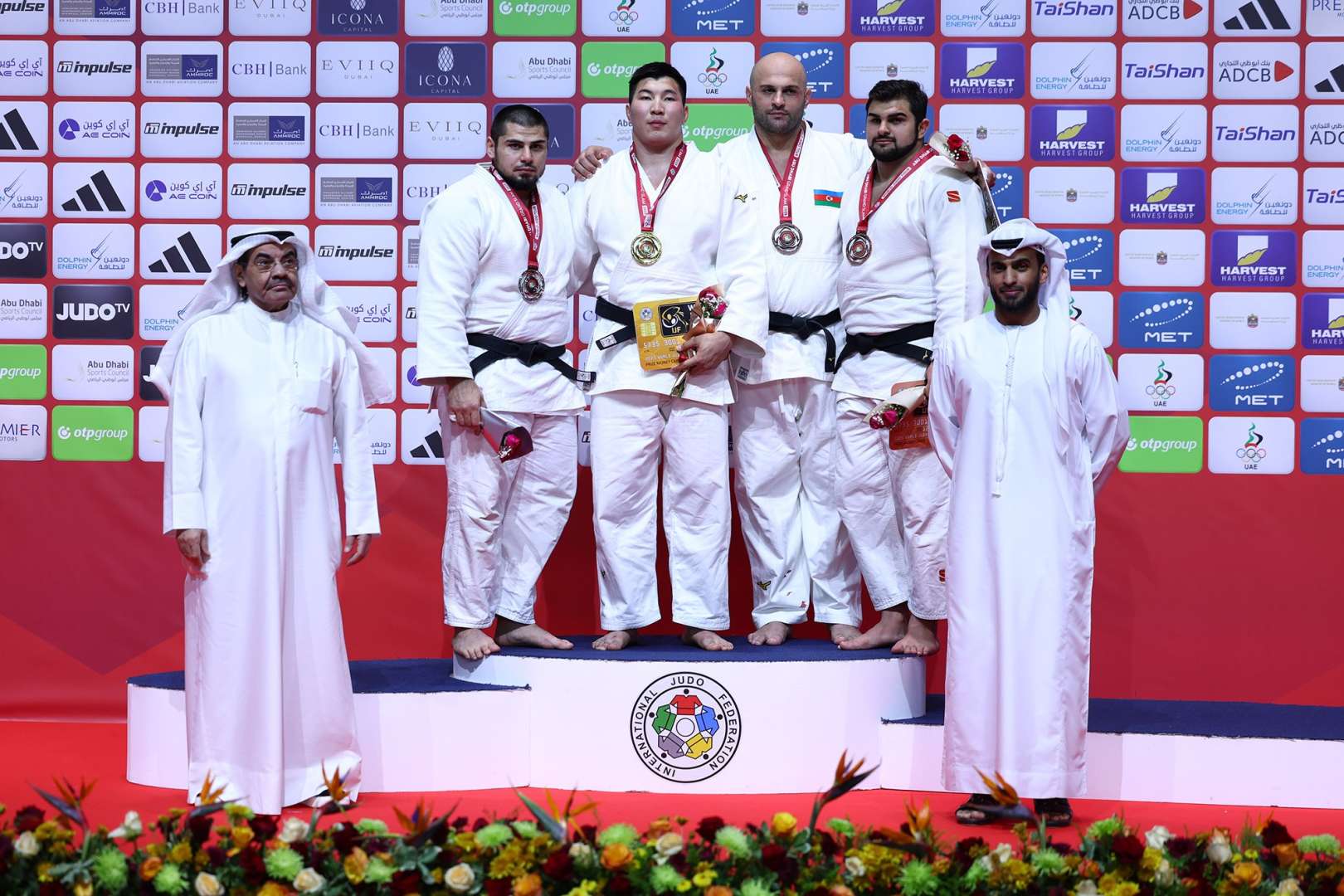
Medals, cheques and flowers were presented by Mr Obaid Al Anzi, Vice President of the International Judo Federation and President of the Judo Union of Asia, and Mr Naji Almessabi, Representative of AMMROC, Sponsor of the Abu Dhabi Grand Slam 2025

Bronze Medal Fights (+100 kg)

lympic Capital Lausanne to Host New Grand Slam

 The International Judo Federation (IJF) is proud to announce that Switzerland will host a brand new stage of the World Judo Tour in 2026. From 28th to 30th August 2026, the city of Lausanne will stage its very first grand slam, marking a major milestone for both Swiss judo and the global judo calendar.

Nestled on the shores of Lake Geneva and known for being the Olympic capital, Lausanne will provide an exceptional setting for the world’s top judoka to gather, compete and showcase the highest level of our sport. “Judo is a deeply rooted Olympic sport and hosting this grand slam will reinforce the central role of the State of Vaud in international sport. It will also serve as a platform to highlight best practices in sport inclusion and to launch initiatives that promote sport and physical activity for people of all ages,” said Christelle Luisier Brodard, President of the Council of the State of Vaud.

“Welcoming another major event in an important Olympic sport is a great course of pride for Lausanne as we prepare to host the grand slam in 2026. It is also wonderful recognition for the Lausanne judo clubs that nurtured Binta Ndiaye, one of Switzerland’s most promising talents. She, like the other champions, will be energised by the enthusiasm of the crowd at the Vaudoise Arena,” added Emilie Moeschler, Municipal Councillor and Head of Sports and Social Cohesion for the city of Lausanne.

Binta Ndiaye and Nils Stump.

Switzerland has a long and proud judo tradition, both educationally and competitively. Swiss athletes continue to shine on the international stage. Among them are Nils Stump, 2023 world champion in Doha, Daniel Eich, holder of seven World Judo Tour medals, and rising stars Binta Ndiaye and April Fohouo, both already medallists at the junior world championships. All four, alongside many others, will have the opportunity to perform in front of their home crowd at the Lausanne Grand Slam 2026.

IJF President Mr Marius Vizer commented, “We are very pleased to introduce the Lausanne Grand Slam. Switzerland is a great judo nation with a long history in our sport. For many years we have collaborated closely, particularly at cadet level. This grand slam is a new step that we believe will add significant value to world judo. Hosting a World Judo Tour event in Lausanne, the home of the International Olympic Committee, carries an important symbolic meaning of which we are very proud.”

The Lausanne Grand Slam 2026 will also have a very special dimension, as it will, for the first time ever, be associated with Para and adaptive judo events, bringing together the entire judo family in all its diversity.

Daniel Eich and April Fohouo.

The successful bid to bring the World Judo Tour to Switzerland is the result of sustained efforts led by Sergei Aschwanden, Olympic medallist and President of the Swiss Judo Federation, whose commitment ensured that Lausanne could welcome one of the most prestigious events in judo. Aschwanden declared, “I am delighted to host an IJF grand slam in the Olympic capital. Thank you to President Vizer and the IJF, as well as to the state of Vaud, the city of Lausanne and the sponsors.”

The IJF looks forward to celebrating this new chapter in August 2026, when the global judo community will gather in Lausanne for an unforgettable grand slam.


Karen Roberts: Always Seeking New Ways to Learn

 Karen Roberts Castle (GBR) was junior world champion at 15 years old and became a senior world medallist and Olympian (Sydney). She’s now the development director of the British Judo Association, undertaking projects to widen judo’s reach, to use judo to link streams of society, and to further deepen the judo community’s understanding of judo philosophy and the power of education.

With her competitive days behind her, Karen seeks new challenges to force evolution and learning, on a constant basis. To that end, this week she competed at the World Kata Championships in Paris, having never competed in kata at any level before. Karen, a 7th dan, was tori for Itsutsu-no-kata with her uke Fiona Chan, an active competitor on the European and world veteran circuits.

Karen Roberts and Fiona Chan performing Itsutsu-no-kata at the 2025 World Kata Championships.

“After the competition, Karen posted on social media, “This was a very purposeful experience in my role as Development Director but what a day, what an experience! From a judo perspective, this has opened up a whole new aspect of judo to explore. On a human level, it’s been about taking on new challenges and commiting to them. The big bonus was the partnership we developed to perform; this is like no other judo experience! Thank you Fiona!!”

Prior to heading out to Paris though, Karen was already very much in deep thought and spoke with the IJF Media Team about the many ideas spinning in her head, “How can I use my Itsutsu-no-kata story to promote kata? It’s odd to talk about my background as it had absolutely nothing to do with kata but I now find that it is a huge part of why I am here, why I am doing this. I want to use my experience to create something that opens possibility, taking away the fear of not knowing enough and the preconceptions around kata among some in the judo world. We can all thrive through the act of learning, no matter the subject matter but when it’s a whole new volume of the judo encyclopaedia, it somehow becomes compelling.

I have been inspired throughout my career in so many ways and by so many people. I watched Izzie Everest and her partner Braydon Robus perform an adaptive version of Nage-no-kata at the British Championships. Izzie has cerebral palsy and doesn’t let it limit her in any way. Judo is just one of many activities she is driven to achieve in. She impresses me so much.

I completed the IJF Academy UCJI course in 2023, another period of accelerated learning, of course including learning and understanding Nage-no-kata better than I ever have before. It was so inspiring to have Olympic champions and academic judo researchers teaching us the kata, a complete crossover.

Karen Roberts' UCJI IJF Academy instructors.
Development work on the UCJI practical week with Olympic champion Tina Trstenjak.

I have also attended several kata courses recently, covering several different forms and levels. It’s been so different from the environments most synonymous with high level shiai and randori where there needs to be a similar level among most participants in order for the progress to be made and the wins to be logged. In the kata courses, all ages, grades and levels are welcome. Everyone learns together and everyone celebrates when anyone makes progress. It feels so much like everyone is making a contribution to that tiny course-based society, perhaps in a way that would have pleased Jigoro Kano.

A kata course at Karen's home club, Pinewood Judo Club, August 2025.

My background is truly a story of shiai. I was raised at Pinewood Judo Club in the south of England by an incredible coach, the late and great Mr Don Werner (8th dan) and there were many of us: European champion Lynn Tilley, world champion and Olympic silver medallist Nicola Fairbrother, Olympian brother and sister Ben and Megan Fletcher, and many more. Our judo life was one of great community, hard training, competition and travel. It was a magnificent life but did not involve even a whiff of kata. To come to this point from that beginning feels so much more exciting than I expected it to and I think that has a lot to do with having a new source of education but still within the sport I love.

I have spent a lot of time over the last few weeks thinking about how Itsutso-no-kata is directly linked to my non-kata background. I studied the Kodokan video, especially the stories behind each technique and reflected on that, really connecting those principles with the reactions used in shiai.”

Karen summarised her thoughts around the links between Itsutsu-no-kata and shiai:

-First technique: the constant application of a smalll force. That was a principle I applied ne-waza and won with it without understanding that idea in this way.

-Second technique: like moving out of the way to help uke on their way; the idea of kaeshi-waza.

-Third technique: like the forces of all rotating techniques.

-Fourth technique: any combination forward to back, the power of changing direction.

-Fifth technique: again the principles of kaeshi-waza. I particularly related this to an opponent throwing a strong grip, giving tori / me the right moment and some to drop under with a seoi-otoshi or other technique. This was my forté in competition.

L-R: Lewis Hannington, Karen Roberts, Jim McKenzie, Fiona Chan and Jim Crompton - Lewis, Jim and Jim have been coaching Karen and Fiona in kata.

“Exploring kata has further expanded my understanding of judo but as is so often the case when open to new ideas, the more we realise how little we know. My new mission is to keep exploring kata for myself but also to provide a springboard to encourage others to jump into it too. Judo is a vehicle for education and we must embrace that in its biggest and most radical senses.”


Julien Goes Around the World (34)

 From Czechia to Austria and Beyond - Julien Brulard (FRA) has been travelling around the world for more than four years now. This time, he takes us through Europe to discover new places and show us that judo goes way beyond borders.

"Since my last update in Czechia, life has been extremely busy as I worked to reorganise the project so that it could continue until the end of the year. After my stay in Mongolia, I was forced to pause due to a lack of funding, so the project is now running at half-capacity until the end of 2025, to avoid any further interruptions. After the competition in Prague, a coach kindly drove me to Austria, where several friends were waiting. Generously, the Austrian Judo Federation supported me by providing accommodation, which made the entire visit possible.

My first stop was Wels, where I met Sabrina Filzmoser, whom I had previously encountered in Nepal. She invited me to her dojo, one of the most beautiful in the country, built in a traditional Japanese architectural style. I taught both adults and children there and it was a joy to spend time with Sabrina again. We share a very similar outlook on life and the work she has done to develop judo in Nepal, Pakistan and other regions of the world is genuinely inspiring. She remains a role model for me and for many others.

From there, I travelled to Linz to visit the national team. Only the women’s team was present at that moment, as the men were away at a camp in the Caucasus region. I spent a few days observing life inside the national training centre.

I then moved to the Vienna region, which kindly covered my accommodation too. I visited several dojos with the help of June, a long-time follower of the project who organised much of my schedule and translated for me, thanks to his fluent French. His support throughout this part of the journey was essential. My first visit in the capital was to Samurai Judo Club, one of the largest clubs in the city, where I taught a short session for children. Then I travelled to the historic town of Mödling for a larger seminar aimed at recreational judoka and veterans, a relaxed and very enjoyable session filled with good energy.

My final stop in Vienna was WAT Stadlau, a strong team competing in the country’s well-known league system, similar to Germany’s Bundesliga. We had a lively training session with several international athletes, including Japanese, French and others, followed by a friendly dinner and great conversations.

Before leaving Austria, I also visited the town of Krems, where the local club organised a small tour to introduce me to the vineyards and regional specialities. I used the opportunity to film a new YouTube video. Training there brought together a wide mix of participants: beginners, a group of girls trying judo for the first time, a veteran world medallist and a cadet world medallist. It was a dynamic and enriching session for everyone.

A Long-Awaited Stage of the Project

After Austria, I prepared for one of the most anticipated stages of the entire project. For years, I had dreamed of visiting the world’s largest country but circumstances had forced me to postpone this trip several times. Earlier this year, however, the Mongolian team invited me to join them at an international tournament held in Barnaul, a major city in the Siberian region and I finally decided it was time to go.

At first, I was worried about how the trip might be perceived but I reminded myself that the essence of this project is to travel everywhere possible, provided my safety is not at risk. The purpose is to connect people through judo.

Upon arrival, I was warmly welcomed by children and local residents wearing traditional clothing, which immediately set me at ease. Despite landing at 3 a.m., I had to be ready early the next morning to visit my first club, Triumf Judo. Each day consisted of two training sessions with different groups. I was assisted throughout by two translators who spoke excellent French and English. Although French was an option, I chose to teach in English so some of the children could practise.

As the week went on, participants from various regions and neighbouring countries arrived for the tournament. Although I was travelling in association with the Mongolian delegation, they had sent me ahead so I could visit several clubs beforehand.

Attendance grew every day. At Sparta Barnaul, a dojo in the suburbs, the mats were completely full, with people sitting around the edges just to watch. After each session, I stayed for a long time to take photos and sign autographs. Many children told me they had never met anyone from Europe before, which made the experience especially meaningful.

Soon, the Mongolian team arrived, including my friend Erdene Baatar and two of his top athletes, Yondonperenlei, double world bronze medallist, and Batkhuyag, a recent grand slam winner. Together, we visited the regional school of a local judo hero. The atmosphere was electric and watching the Mongolian team train was inspiring.

Then came the tournament and the training camp, probably the largest I have ever attended, with hundreds of judoka training across six mats. It was so crowded that we split the group in two: three mats for the Mongolian team and three for me. The competition felt like a world-level event, complete with a beautiful opening ceremony featuring local dances and singers. The level was high, with young athletes from Mongolia, Central Asia and other regions.

Across the Altai Region

My final days were spent in the Gorno-Altaysk area, a rural and culturally diverse region. The country contains a striking number of ethnicities and it was fascinating to meet different communities. We visited local landmarks, experienced the traditional banya and shared wonderful moments with local judoka. In just over a week, I formed friendships that I know will last for years.

Leaving was emotional. This project has given me countless powerful memories but this part of the journey was particularly special. Everything went perfectly and I received many messages of support afterwards. Judo alone was the purpose of this trip.

Looking Ahead

Earlier this year, financial difficulties required me to restructure the project. To prevent this from happening again I launched a campaign for Season 5. If you enjoy this journey and would like to help me complete the European leg and reach the American continent next year, any contribution helps immensely. I am deeply grateful to everyone who has supported the Judo Nomad adventure so far. Thank you from the bottom of my heart."